
Dracula's Guest
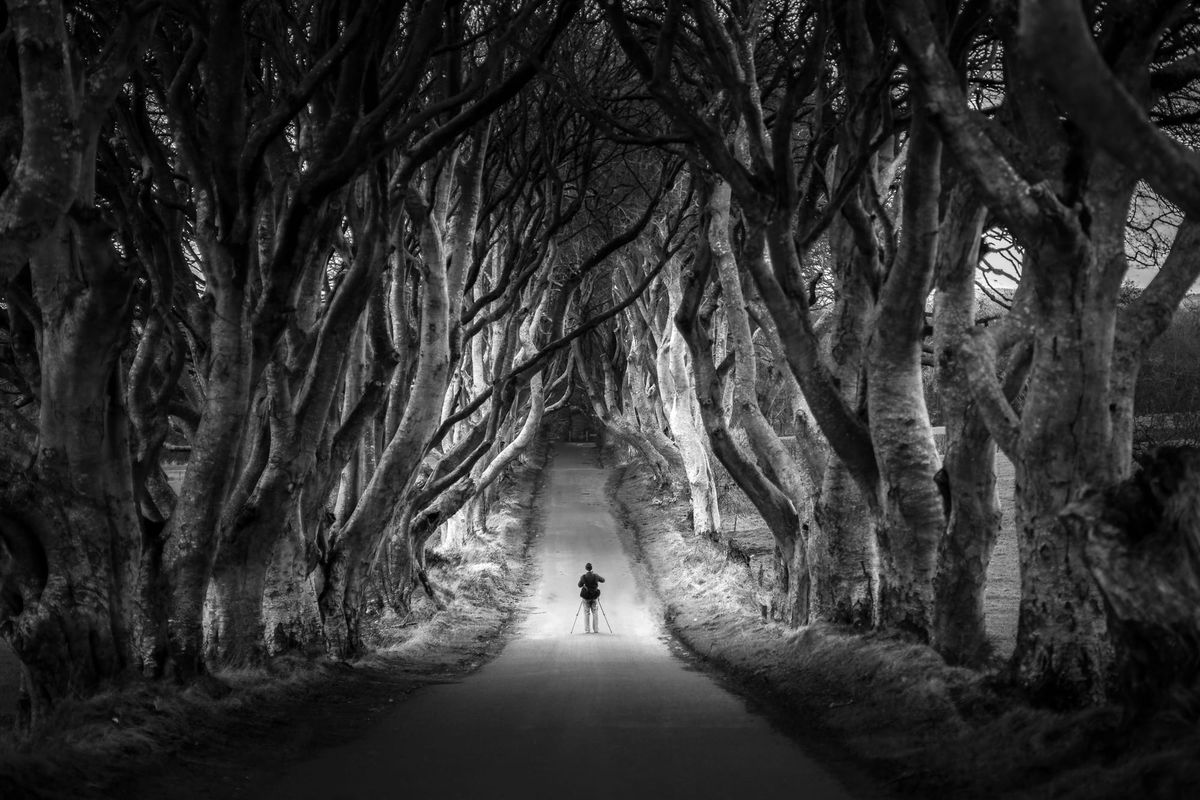
Walpurgis Night
In the summer of 2019 I returned to university after a gap of fifteen years to complete my undergraduate degree. I was, to put it mildly, uncertain about what I had got myself into. One of my early classes was a course on the horror story, and it was here that I encountered a professor whose advice permanently changed the way I think about literary analysis, and made it considerably more enjoyable in the process.
The advice was simple but liberating. She told us that in literary analysis the question is never whether you are right or wrong, or even whether the professor agrees with your reading. The only question that matters is whether you can make a convincing argument for your interpretation. In her own words, "the question is never if you are right or wrong, the question is if you can convince me that you might be right."
The paper that follows was my first attempt to take that advice seriously, applied to Bram Stoker's short story Dracula's Guest. The central argument is the one I made then, in that first moment where my mind suddenly saw the galaxies of possibilities in literary analysis. I have, however, revised and developed it a bit since, bringing it closer to the level of academic experience I have now gained in the years since that first undergraduate attempt.
There is a convention in horror that every story must have a monster. The monster need not be physical, need not have form or body, and need not even be real. It can be imagined, cultural, intangible, abstract. But something must occupy that role. The philosopher Noël Carroll, in The Philosophy of Horror, offers a way of identifying that role. What separates true horror from a mere story containing monsters, he argues, is the attitude of the characters. In horror, the human characters regard the monster as abnormal, as a disturbance of the natural order, and their reactions instruct the reader. Works of horror, Carroll writes, "teach us, in large measure, the appropriate way to respond to them" (Carroll 48). The monster, in other words, is whatever the characters' fear identifies as the monster. Hold on to that idea, because it will prove decisive.
In Dracula's Guest, Bram Stoker's short story published posthumously in 1914 and believed to be an excised chapter from Dracula, the answer to the question of what the monster is seems obvious. It is there in the title. And yet the title is a misdirection, one that Stoker constructs with considerable craft.
The reader arrives at Dracula's Guest carrying significant cultural baggage. Dracula is one of the most recognisable figures in horror, his name synonymous with threat and predation. Stoker knows this, and uses it. The title primes the reader to expect Dracula as the monster, to read every shadow and danger in the story as his doing. But when Dracula finally appears, it is in a telegram urging that no effort be spared to find the protagonist and "ensure his safety" (Stoker 28). Far from being the monster of the tale, Dracula is its unlikely rescuer. The misdirection is the point. It is in fact the reader's own external knowledge of the character, combined with the title, that leads us to this mistaken belief. This is an interesting effect caused by the ubiquitousness of Dracula throughout horror and modern culture, and it is worth pausing on, because it tells us something important about how Stoker is manipulating our expectations. Having led us to the wrong answer with the title, he is free to hide the real monster in plain sight.
Before we can identify what that monster is, we should consider and dispense with the other apparent candidates. The story offers several. There is the Countess Dolingen of Gratz, the vampiric woman in the tomb, staked through the marble and briefly visible in the lightning flash before she is consumed in flame. There is the wolf, "a gigantic wolf" with "two great flaming eyes" (Stoker 21), which lies finally on the protagonist's chest and marks his throat. There are the rising phantoms of the graveyard at the climax, the "phantoms of their sheeted-dead" closing in through the driving hail (Stoker 19). Each of these is monstrous in the conventional sense. And yet none of them is the monster of the story.
The reason is simple and it is in the text itself, and it is exactly the test Carroll proposes. Consider what the characters actually fear. Consider what they warn against. If the monster is whatever the characters' reactions identify as the monster, then we need only look at what they react to. And not once does Johann mention vampires. Not once does he warn of wolves or the undead or anything lurking in the valley. Every warning, every crossed finger, every moment of his rapidly escalating terror is directed at one thing and one thing only. The night. Walpurgis Nacht. The Countess, the wolf, the rising dead, none of these are anticipated, none are named, none are feared in advance. They arrive without warning because they are not the source of the horror. By Carroll's own test, the monster is whatever the characters teach us to fear, and what they teach us to fear is the night.
From the very first pages the night announces itself as the true source of dread. The maitre d'hotel warns Johann to be back by nightfall, adding with studied casualness, "for you know what night it is" (Stoker 6). When the protagonist asks Johann directly what night it is, the coachman "crossed himself, as he answered laconically: 'Walpurgis nacht'" (Stoker 7). He will not say the name without crossing himself for protection. As his terror grows, the pattern intensifies. Each time he is about to explain, "he pulled himself up, saying, as he crossed himself: 'Walpurgis-Nacht!'" (Stoker 8). His fear is immediate and total, a physical response to the mere naming of the date. Through Johann's reaction the reader is being taught something. This night is the thing to fear. And crucially, only this night. Not what lurks in the valley. Not the Countess in her tomb. The night itself.
Jeffrey Jerome Cohen, in his influential essay Monster Culture: Seven Theses, gives us a further way to understand what kind of monster this is. The monster, Cohen argues, is always a cultural body. It "is born only at this metaphoric crossroads, as an embodiment of a certain cultural moment—of a time, a feeling, and a place" (Cohen 4). The monster is never arbitrary. It crystallises something real about the culture that produces it. Understood this way, Walpurgis Night is a perfect monster, and Cohen's phrasing is almost uncannily apt, for Walpurgis Night is literally a time. In Germanic and Central European folk tradition, the eve of the first of May was the night, in Stoker's own words, "when, according to the belief of millions of people, the devil was abroad—when the graves were opened and the dead came forth and walked. When all evil things of earth and air and water held revel" (Stoker 17–18). It was a night of profound cultural terror, encoded in centuries of folk belief. Walpurgis Night is not a creature Stoker invented. It is a monster that an entire culture had already made, and that his protagonist fatally underestimates.
Cohen's third thesis argues that the monster is "the harbinger of category crisis," a "form suspended between forms that threatens to smash distinctions" (Cohen 6). Walpurgis Night is precisely this. It is the night when every categorical boundary fails simultaneously. The dead do not stay dead. The natural order inverts. The living are no longer safe in the spaces they normally inhabit. It is not a monster that crosses a boundary. It is a night that dissolves all boundaries at once. The Countess, the wolf, the phantoms in the graveyard are not independent threats. They are the boundary collapse made visible.
The protagonist, in one of horror's most reliable tropes, dismisses all of this entirely. "Go home, Johann—Walpurgis-nacht doesn't concern Englishmen" (Stoker 12), he declares, and sets off into the valley Johann has refused to enter. Stoker reinforces the dismissal with a pointed detail. The protagonist proceeds, we are told, "with a light heart" (Stoker 13), seeing "not the slightest reason" for the objection (Stoker 13). That lightness is the reader's warning. In horror, the character who dismisses local knowledge and folk terror on the grounds of rational superiority is always the one the monster is waiting for. And the monster here has been patiently waiting, as it waits every year, for someone foolish enough to ignore the warning.
What follows is the monster's methodical demonstration of its power. The temperature drops. The wolves begin to cry. The snow closes in. The protagonist finds himself in a graveyard before the tomb of the Countess, the dead rising around him. Each escalation is the night tightening its grip. And the moment of realisation, when the protagonist finally names what he is facing, is the story's turning point. The discovery comes, in Stoker's words, "with a terrible shock. This was Walpurgis Night!" (Stoker 17). The protagonist has known the name since the second page. What he has finally understood is what the name means. He has finally joined Johann, and the reader, in understanding what the real monster is.
Cohen's fifth thesis offers one more lens. The monster, he argues, "polices the borders of the possible," standing "as a warning against exploration of its uncertain demesnes" (Cohen 12). Walpurgis Night functions exactly this way. It is a temporal border, a night-long prohibition against certain spaces and certain behaviours. Johann's terror is the folk expression of this prohibition, learned and embodied across generations. The protagonist's English rationalism, his dismissal of superstition, is not bravery. It is a failure to understand the nature of what he is dealing with. And to step outside that border is to risk not just attack but transformation. The protagonist does not emerge from Walpurgis Night unchanged. He is found half-frozen, barely alive, his throat marked by something the soldiers carefully agree to call "a dog" (Stoker 25), even as one of them insists, "A wolf—and yet not a wolf!" (Stoker 23).
There is one further quality of Walpurgis Night as a monster that makes it particularly and uniquely unsettling. Cohen's second thesis tells us that the monster always escapes. "No monster tastes of death but once," he writes, for "the revenant by definition returns" (Cohen 5). Walpurgis Night cannot be killed, staked, or defeated. The protagonist survives it not by overcoming it but simply by lasting until morning. The soldiers find him as daylight approaches, "almost broad daylight," with the sun rising "like a path of blood, over the waste of snow" (Stoker 25). The night ends. But Walpurgis Night will return. It returns every year. It has been returning for centuries. Unlike the Countess, it cannot be destroyed by lightning. Unlike the wolf, it cannot be shot. It is perhaps the purest form of the horror monster, the one that requires no defeat because it operates entirely outside the logic of narrative resolution. It simply ends. And waits. And comes back.
So the story ends with the protagonist rescued by soldiers sent at the behest of the very figure the reader spent the story believing to be the monster. That figure, Dracula, turns out to be the saviour, the source of "some form of mysterious protection" (Stoker 28). Both the protagonist and the reader are left with an unmistakable dread, not of a creature that can be faced and defeated, but of a night that cannot. Of a monster that is already marking the days until its return.
Works Cited
Carroll, Noël. "'The Nature of Horror,' from The Philosophy of Horror." Classic Readings on Monster Theory, edited by Asa Simon Mittman and Marcus Hensel, Arc Humanities Press, 2018, pp. 41–52.
Cohen, Jeffrey Jerome. "Monster Culture (Seven Theses)." Monster Theory: Reading Culture, edited by Jeffrey Jerome Cohen, University of Minnesota Press, 1996, pp. 3–25.
Stoker, Bram. Dracula's Guest and Other Stories. The Floating Press, 2009.
Photo Credit
"The photographer at the Dark Hedges, Northern Ireland" by Giuseppe Milo (www.pixael.com) is licensed under CC BY 2.0. To view a copy of this license, visit https://creativecommons.org/licenses/by/2.0/?ref=openverse.